Edge Grain vs End Grain - What's the Difference?
The basics
Edge Grain or End Grain — Does it actually matter?
It's one of the most common questions we get. Most people pick a cutting board based on how it looks — and that's not a bad instinct, because a well-made hardwood board is worth having on your counter. But the construction underneath is what determines how your board performs, how it holds up over years of daily use, and how much attention it needs from you. Understanding the difference takes about five minutes and will make you a much better buyer.
How it's built
How Wood is Cut Determines Everything
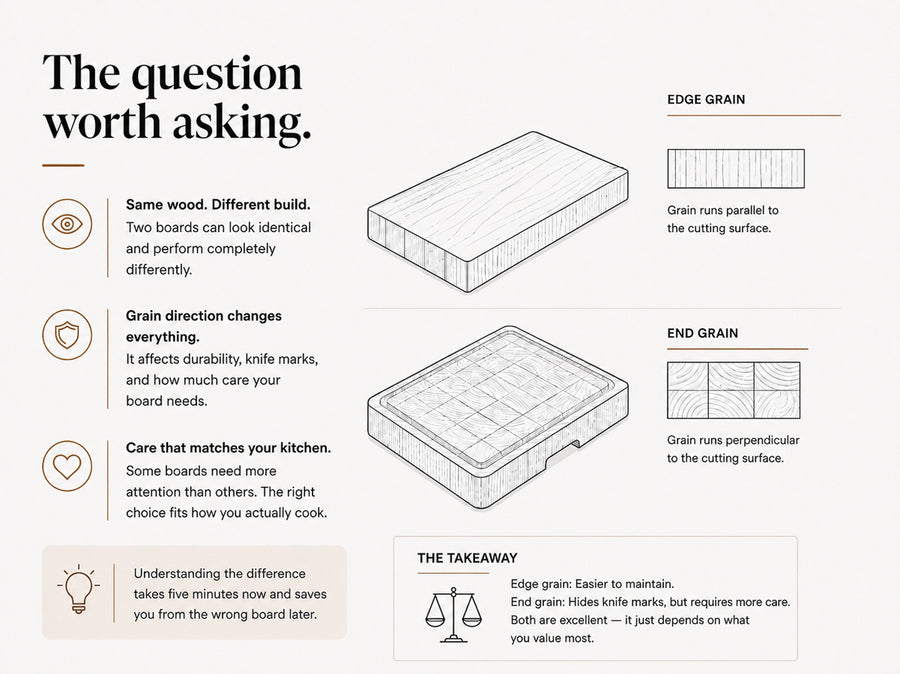
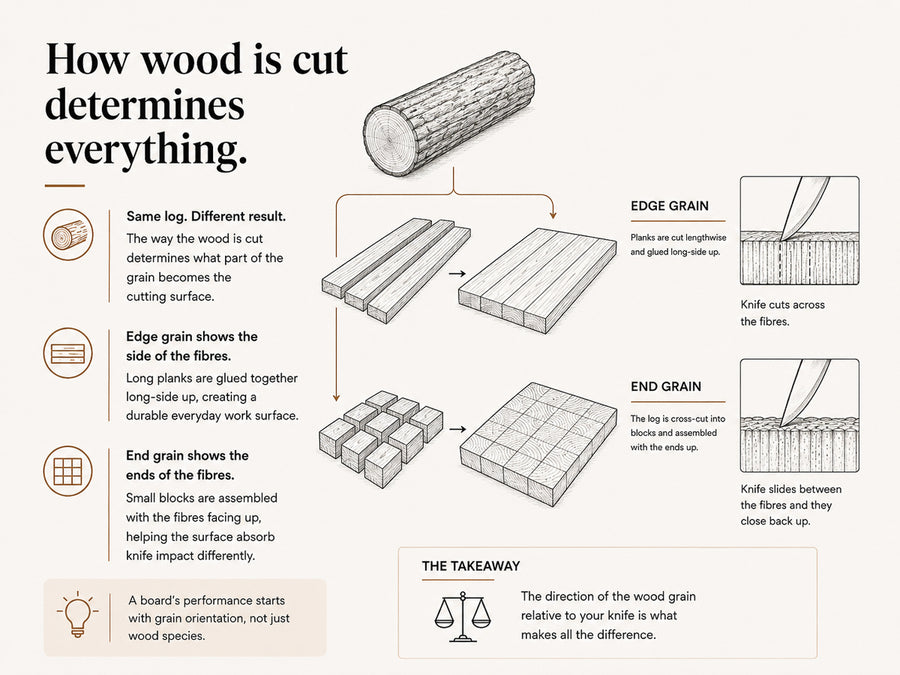
Picture a log. When you slice it into planks and glue them together with the long side facing up, that's edge grain — the grain runs parallel to your cutting surface. When you cut across the width of the log and expose the ends of those fibres — like looking down the barrel of a tree — that's end grain. The grain runs perpendicular to the surface, straight up toward your knife.
That difference in orientation is everything. On an edge grain board, your knife cuts across the wood fibers. On an end grain board, the blade slides between them — the fibers part, and close back up after each strike. Same wood, completely different relationship with your knife.
The everyday choice
Edge Grain: The Workhorse
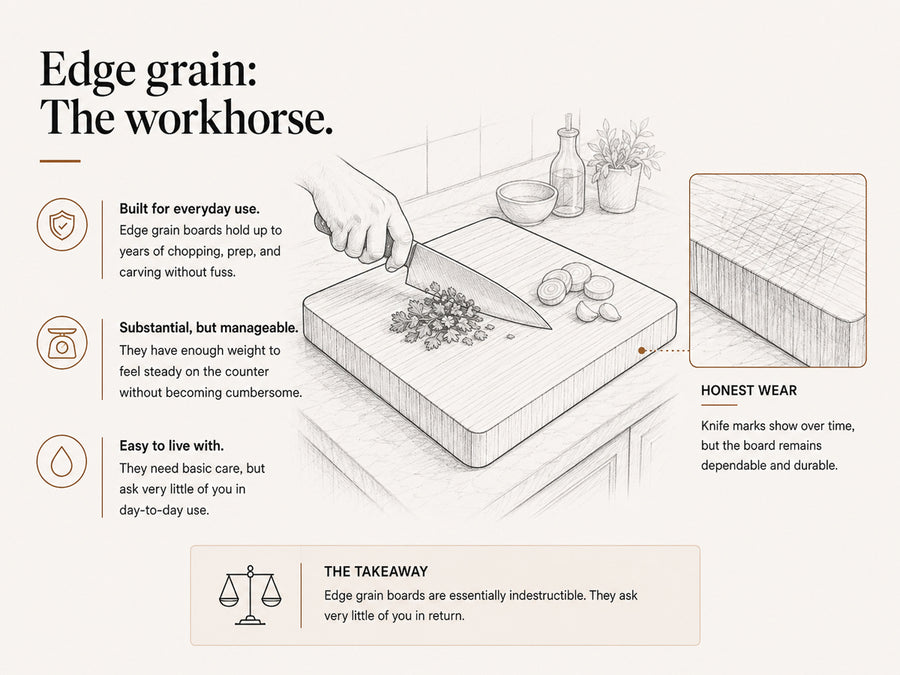
Edge grain boards are built from planks glued together side by side, long grain facing up. The result is a strong, stable surface with clean linear lines running across the board — visually striking and built for daily punishment.
When your knife hits an edge grain surface, it cuts across the wood fibers. Over time you'll see knife marks — that's normal and expected. But here's what matters: edge grain boards are essentially indestructible. They're very hard to warp and crack, and they don't demand much from you. Wipe them down, oil them a few times a year, and they'll outlast your kitchen renovation.
Edge grain is also significantly more forgiving when it comes to its environment. Heat, humidity, and moisture affect it far less than end grain — making it the lower-maintenance choice for kitchens that see a lot of action without a lot of fuss.
The premium choice
End Grain: The Gold Standard
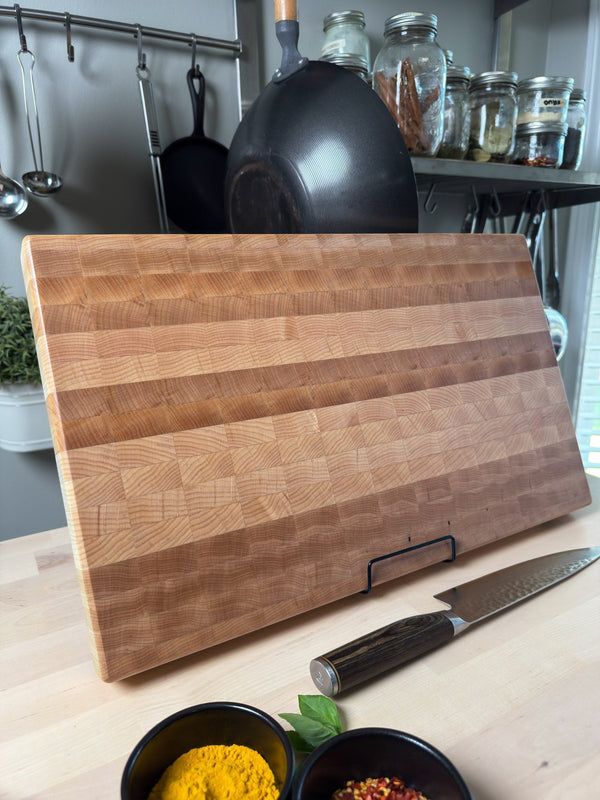
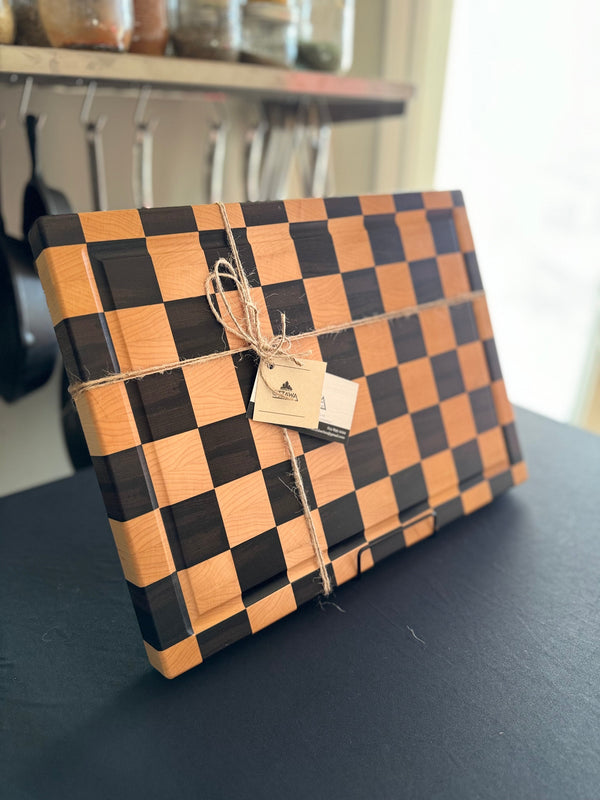
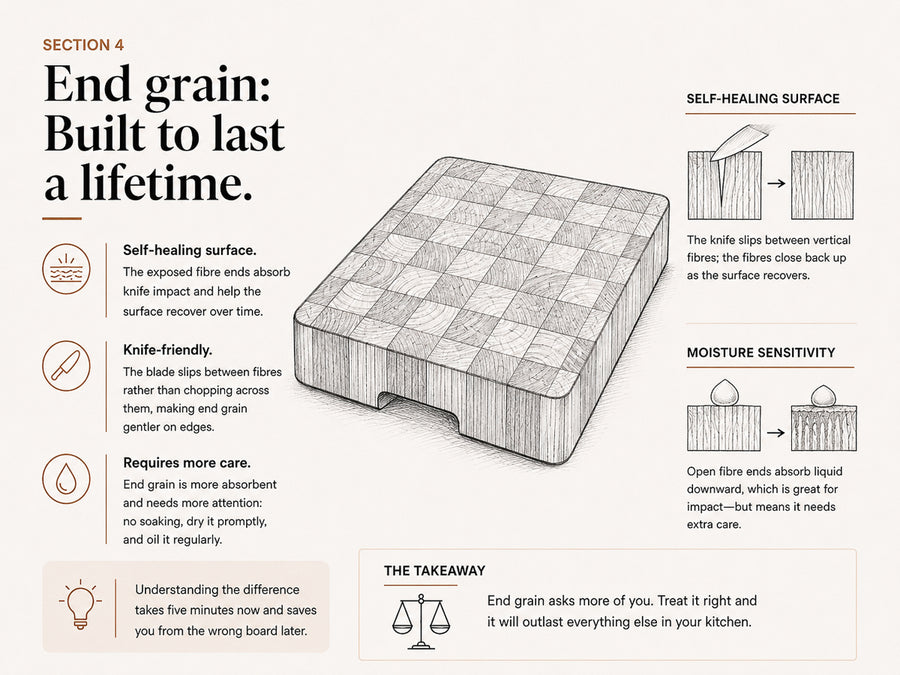
End grain boards are constructed from small blocks of wood glued together with the end of the fibers facing up — the same orientation you'd see looking down the barrel of a log. That checkerboard or mosaic pattern on the surface isn't just visual. It's a byproduct of how the wood is oriented, and it's what makes end grain perform differently from anything else in your kitchen.
When your knife strikes an end grain surface, the blade slides between the fibers rather than cutting across them. The fibers part, absorb the impact, and close back up. This is what people mean by self-healing — and it's why end grain boards stay cleaner looking under heavy use, extend the life of your knife edges, and develop a natural patina instead of visible scarring.
End grain does ask more of you in return. Because the fibers are exposed and facing up, end grain absorbs moisture 10 to 15 times faster than edge grain. Heat, humidity, and standing water are its main enemies. Never soak it, never put it near a heat source, and oil it regularly. Treat it right and you'll have it for years.
Keeping it alive
Care Is Simple. Your Board Will Tell You When It's time
Every board leaves our shop loaded with food grade mineral oil and beeswax. Beeswax is our finish of choice — it repels water better than oil alone, and most quality beeswax blends already contain mineral oil in the formula. You're starting from a strong base.
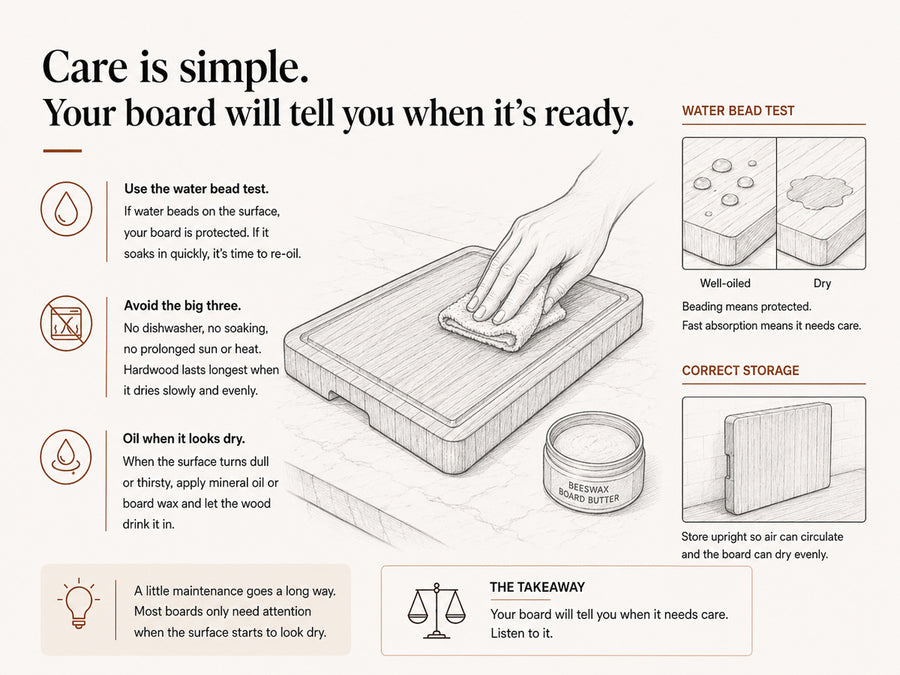
From there, your board tells you when it needs attention. Do the water test: drop a few beads of water on the surface. If they bead up and roll off, you're good. If the water soaks in or the surface looks dull and flat, it's time to reapply. Don't rush it — let the board tell you when it's ready, and let the product absorb fully before wiping the excess off. The board must be completely dry before you apply anything.
Day to day: wipe it down with a damp cloth. Use a little soap if you need to — just know that soap is designed to pull oil out of surfaces, so don't overdo it. Never submerge it, never run it under hot water, never put it in the dishwasher, never leave it in direct sunlight. Wash it, stand it upright immediately to dry, and store it upright.
End grain needs more frequent attention than edge grain — because it absorbs moisture faster, it also takes in care products faster. Edge grain is more resistant to both, so it needs less and less often. Same routine, different frequency.
The decision
Which Board Is Right for You?
If you've made it this far, you already know more about cutting boards than most people who own one. Here's how to make the call.
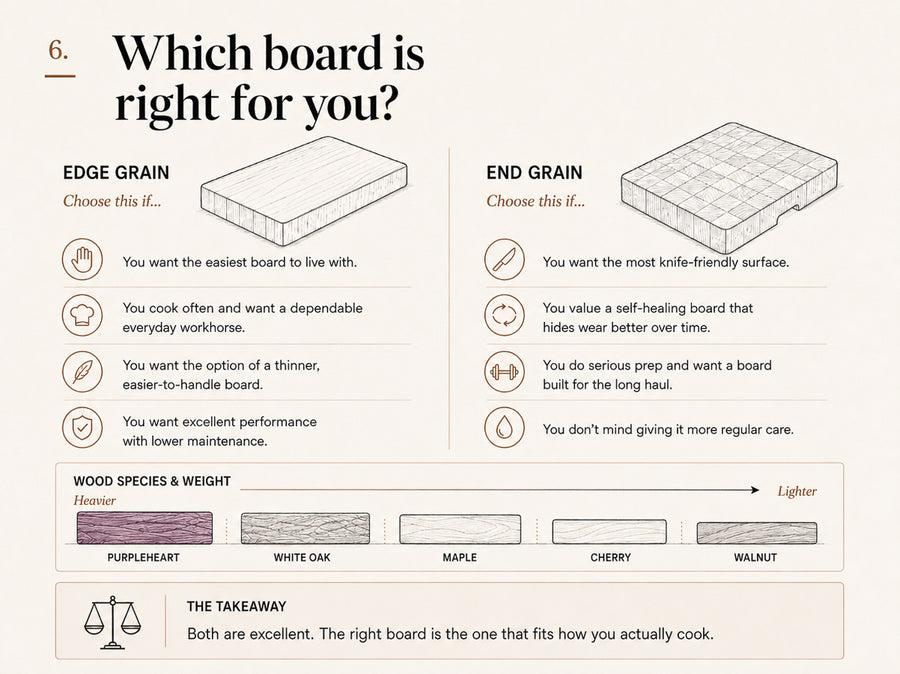
Choose edge grain if you want a board that requires almost no thought. You cook regularly, you want something durable and easy to maintain, and you'd rather spend your energy in the kitchen than on the board itself. Edge grain handles everything you throw at it and asks very little back.
Choose end grain if you cook seriously and you want the best surface available. You care about your knife edges. You want a board that improves with age rather than showing wear. You're willing to give it a little more attention because you understand what you're getting in return — a board that could genuinely last a lifetime and then some.
Still not sure? Think about weight and wood species before you decide on grain orientation. We have a materials page that explains weight and cost here.
Both choices are excellent. The right one is the one that fits how you actually cook.